
The term “smokeless” is widely used, but rarely defined with engineering accuracy.
In practice, many products labeled as smokeless do not meet the basic conditions required for secondary combustion.
1. Secondary Combustion Is a System — Not a Single Feature
A common misconception in the industry is that secondary combustion can be achieved through hole patterns or visual design alone.
In reality, secondary combustion requires a system:
- A defined secondary air chamber
- Controlled preheating of incoming air
- A stable airflow path separated from primary combustion
Many manufacturers rely on single-wall firebox designs, which structurally cannot support true secondary combustion.
Without an independent airflow layer and temperature buildup, secondary burn remains incomplete or inconsistent, regardless of appearance.
2. Air Intake Position Is Frequently Misjudged
Another recurring issue is improper air intake placement.
Some designs position intake holes primarily at the bottom of the fire pit, assuming this will naturally increase airflow.
In real outdoor use, bottom-positioned intakes often:
- Struggle to draw sufficient air once ash accumulates
- Become partially blocked during continuous burning
- Fail to maintain stable oxygen supply for secondary combustion
As a result, combustion efficiency declines over time rather than improving.
3. Visual Clean Burns Do Not Equal Functional Performance
Short-term clean flames can be misleading.
Without a properly structured secondary combustion system, smoke reduction is often temporary and dependent on ideal fuel and loading conditions.
Once variables change — fuel moisture, burn duration, ambient airflow — performance inconsistencies quickly surface.
4. Manufacturing Consistency Amplifies or Destroys Design Intent
Even well-designed systems fail if production consistency is ignored.
In secondary combustion fire pits, small dimensional deviations affect:
- Airflow velocity
- Combustion pressure balance
- Secondary flame stability
This is why units that appear identical can behave differently in the field.
What This Means for Trade Buyers
For distributors and brands, the risk is not adopting a new category — it is adopting an incomplete combustion concept.
Products built on simplified or visually driven designs often lead to:
- Inconsistent end-user experience
- Elevated after-sales involvement
- Difficulty defending performance claims
Understanding whether a fire pit is built as a combustion system, rather than a styled firebox, is critical for long-term commercial success.
Written by Ponel — Founder of OneProStove
Questions about the product or sourcing? Reach out directly — we respond within 1 business day:info@oneprostove.com
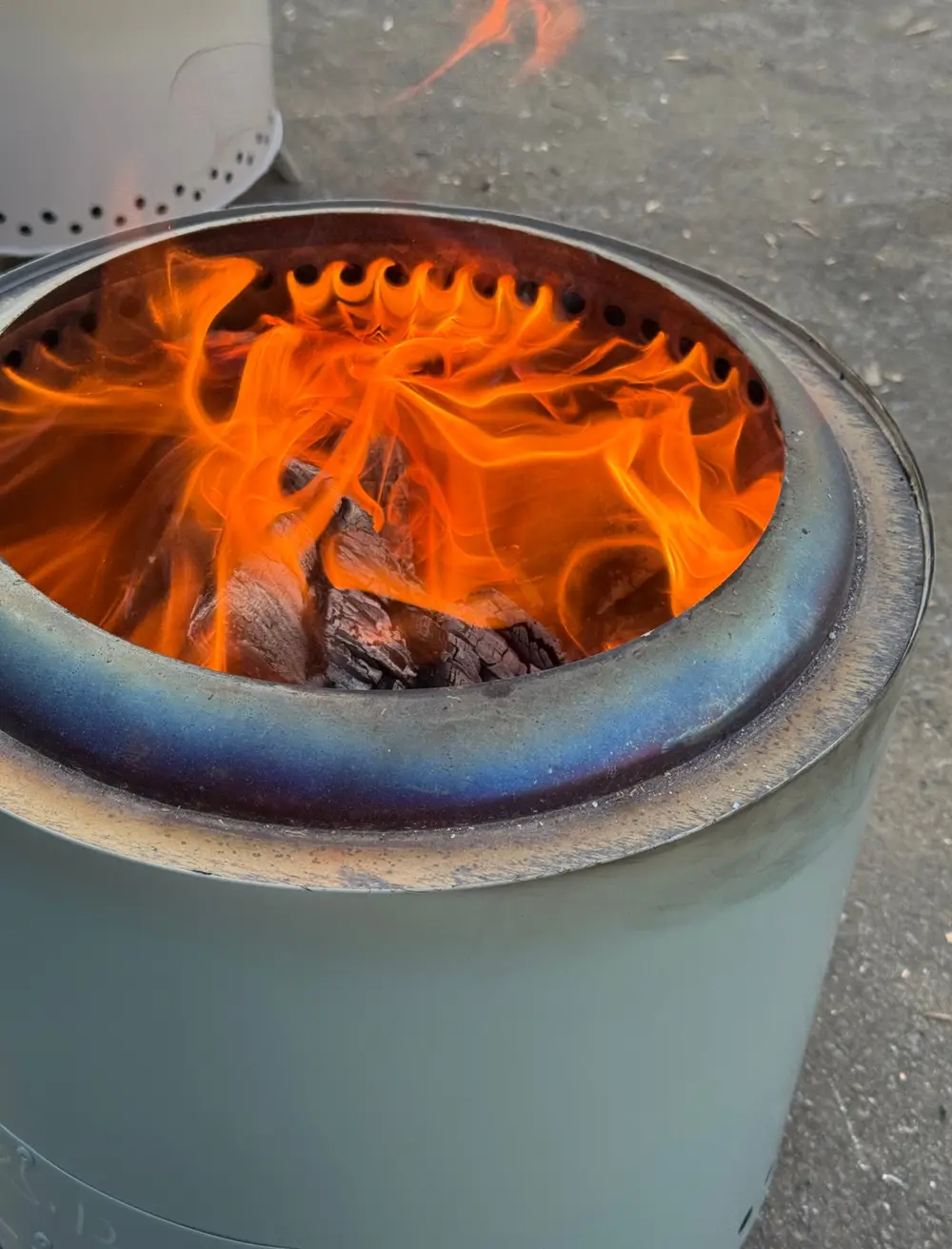
[…] This process burns off the fine particles that would have become smoke. Effective smokeless technology relies on this precise airflow management, not just a random pattern of holes. It’s a more […]