
When discussing smokeless fire pits, most manufacturers highlight features such as double-wall construction, secondary combustion, or airflow systems.
However, one critical component is often overlooked:
the ash pan.
Although it appears to be a simple structural element, the design of the ash pan can significantly affect both the combustion performance and the user experience of a smokeless fire pit.
Unfortunately, many factories underestimate this detail.
⸻
A Common Problem in Fire Pit Manufacturing
In many fire pits on the market today, the ash management system is poorly designed. Two common design flaws frequently appear.
- The Burn Plate Is Not Properly Elevated
In some designs, the burn plate sits too close to the base of the fire pit or directly above the ash collection area.
When this happens, ash produced during combustion quickly accumulates beneath the fuel bed. Over time, this ash begins to block the primary airflow channels that supply oxygen to the fire.
The result is predictable:
• restricted oxygen supply
• reduced combustion temperature
• unstable flames
• increased smoke production
In other words, even a well-designed secondary combustion system cannot perform properly if the primary airflow is compromised.
A properly engineered ash pan must maintain sufficient vertical clearance between the burn plate and the ash collection area. This allows air to move freely from the bottom intake vents through the fuel bed.
Without this airflow space, combustion efficiency declines rapidly during extended burn sessions.
⸻
- Ash Removal Is Inconvenient
Another common issue is how ash is removed from the fire pit.
Many fire pits require the entire unit to be lifted or flipped over in order to empty accumulated ash. While this may simplify manufacturing, it creates a poor user experience.
After several uses, ash buildup becomes unavoidable. If the process of removing ash is inconvenient, users are less likely to clean the fire pit regularly. This leads to excessive ash accumulation, which again interferes with airflow and combustion performance.
An effective ash pan should therefore be designed not only for airflow management, but also for easy and practical ash disposal.
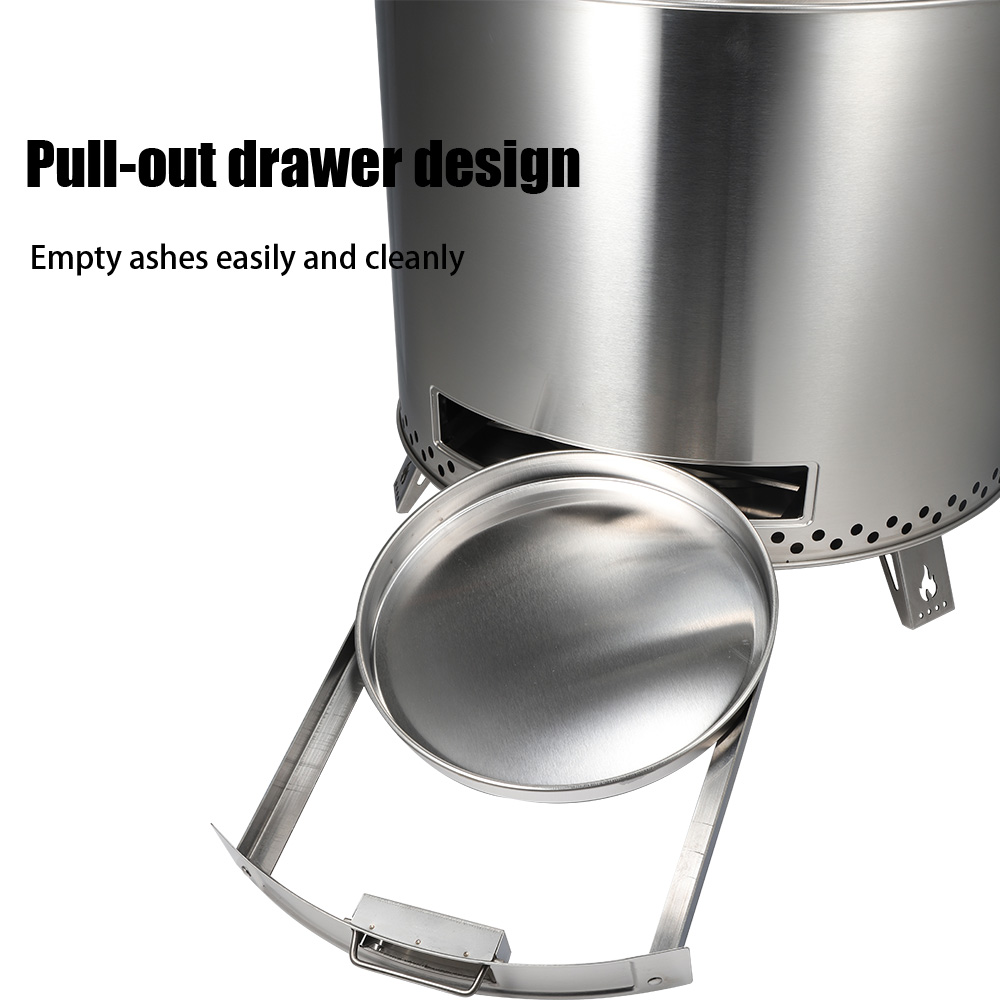
A removable or accessible ash tray allows users to clean the fire pit quickly without disrupting the structure of the unit.KZ-Y380/500
⸻
Why This Small Detail Has a Large Impact
From an engineering perspective, the ash pan plays two important roles simultaneously:
1. Airflow protection – preventing ash from blocking the primary combustion air supply
2. Ash management – ensuring accumulated ash can be removed easily
If either function is neglected, the overall performance of the fire pit can decline significantly.
In smokeless fire pits, combustion efficiency depends on maintaining a stable, high-temperature burn. Even small restrictions in airflow can disrupt this balance.
Because of this, the ash pan is not simply a container for ash. It is an integrated part of the combustion airflow system.
⸻
Rethinking Ash Pan Design in Smokeless Fire Pits
For manufacturers who want to improve product performance, ash pan design deserves far more attention than it typically receives.
Several design principles are especially important:
• adequate clearance between burn plate and ash pan
• proper airflow pathways beneath the fuel bed
• sufficient ash capacity for extended burn cycles
• convenient and safe ash removal
Although the ash pan may appear to be a minor component, optimizing this detail can noticeably improve both combustion efficiency and overall usability.
⸻
Conclusion
In smokeless fire pit design, small engineering decisions often determine the difference between average and high-performance products.
Ash pan design is a clear example of this principle.
While many manufacturers focus on visible features such as flame pattern or exterior structure, the internal details that support airflow and combustion are just as important.
Sometimes, the smallest components have the greatest impact on how well a fire pit truly performs.
When discussing smokeless fire pits, most manufacturers highlight features such as double-wall construction, secondary combustion, or airflow systems.
However, one critical component is often overlooked:
the ash pan.
Although it appears to be a simple structural element, the design of the ash pan can significantly affect both the combustion performance and the user experience of a smokeless fire pit.
Unfortunately, many factories underestimate this detail.
⸻
A Common Problem in Fire Pit Manufacturing
In many fire pits on the market today, the ash management system is poorly designed. Two common design flaws frequently appear.
- The Burn Plate Is Not Properly Elevated
In some designs, the burn plate sits too close to the base of the fire pit or directly above the ash collection area.
When this happens, ash produced during combustion quickly accumulates beneath the fuel bed. Over time, this ash begins to block the primary airflow channels that supply oxygen to the fire.
The result is predictable:
• restricted oxygen supply
• reduced combustion temperature
• unstable flames
• increased smoke production
In other words, even a well-designed secondary combustion system cannot perform properly if the primary airflow is compromised.
A properly engineered ash pan must maintain sufficient vertical clearance between the burn plate and the ash collection area. This allows air to move freely from the bottom intake vents through the fuel bed.
Without this airflow space, combustion efficiency declines rapidly during extended burn sessions.
⸻
- Ash Removal Is Inconvenient
Another common issue is how ash is removed from the fire pit.
Many fire pits require the entire unit to be lifted or flipped over in order to empty accumulated ash. While this may simplify manufacturing, it creates a poor user experience.
After several uses, ash buildup becomes unavoidable. If the process of removing ash is inconvenient, users are less likely to clean the fire pit regularly. This leads to excessive ash accumulation, which again interferes with airflow and combustion performance.
An effective ash pan should therefore be designed not only for airflow management, but also for easy and practical ash disposal.
A removable or accessible ash tray allows users to clean the fire pit quickly without disrupting the structure of the unit.
⸻
Why This Small Detail Has a Large Impact
From an engineering perspective, the ash pan plays two important roles simultaneously:
1. Airflow protection – preventing ash from blocking the primary combustion air supply
2. Ash management – ensuring accumulated ash can be removed easily
If either function is neglected, the overall performance of the fire pit can decline significantly.
In smokeless fire pits, combustion efficiency depends on maintaining a stable, high-temperature burn. Even small restrictions in airflow can disrupt this balance.
Because of this, the ash pan is not simply a container for ash. It is an integrated part of the combustion airflow system.
⸻
Rethinking Ash Pan Design in Smokeless Fire Pits
For manufacturers who want to improve product performance, ash pan design deserves far more attention than it typically receives.
Several design principles are especially important:
• adequate clearance between burn plate and ash pan
• proper airflow pathways beneath the fuel bed
• sufficient ash capacity for extended burn cycles
• convenient and safe ash removal
Although the ash pan may appear to be a minor component, optimizing this detail can noticeably improve both combustion efficiency and overall usability.
⸻
Conclusion
In smokeless fire pit design, small engineering decisions often determine the difference between average and high-performance products.
Ash pan design is a clear example of this principle.
While many manufacturers focus on visible features such as flame pattern or exterior structure, the internal details that support airflow and combustion are just as important.
Sometimes, the smallest components have the greatest impact on how well a fire pit truly performs.
Written by Ponel — Founder of OneProStove
Questions about the product or sourcing? Reach out directly — we respond within 1 business day:info@oneprostove.com