
Introduction
The term “smokeless” is widely used in the outdoor heating market, but genuine smokeless performance is not a marketing claim—it is the result of precise structural engineering and thermodynamic design.
For B2B buyers, distributors, and brand owners looking to integrate these products into their portfolio, understanding the core anatomy of a smokeless fire pit is the most reliable way to separate premium manufacturers from low-quality factories.
Today, the global smokeless fire pit market is largely supplied by Chinese manufacturers. This is not a compromise—it is where the engineering expertise lives. Even leading Western consumer brands such as Solo Stove, whose products are designed in the United States, rely on Chinese factories for production. The question for B2B buyers is therefore not whether to source from China, but how to identify which Chinese manufacturers are operating at a genuinely premium level.
This guide provides a detailed breakdown of what makes a fire pit truly smokeless, and what you should look for when evaluating a supplier.
1. Smokeless Fire Pit Double-Wall Structure: The Foundation of Secondary Combustion.
A fire pit cannot perform as “smokeless” without a double-wall structure—an inner wall and an outer wall that together create a critical air-heating jacket. As cold air enters from the bottom, it absorbs heat from the inner wall, rises through the jacket, and is expelled from the top vents.
The black smoke produced by burning wood consists of unburned hydrocarbons. Eliminating them requires sustained extreme temperatures that a standard single-wall fire pit cannot achieve. The double-wall design preheats the incoming air before it reaches the combustion zone, enabling more complete secondary combustion.
The Air Knife Effect: The preheated, oxygen-rich air expelled through the top inner vents creates a high-velocity flow that ignites rising smoke, producing the intense, upward jet flame characteristic of premium smokeless fire pits.
Beyond combustion efficiency, the double-wall structure serves three additional engineering functions:
• Thermal Fatigue Mitigation: Sustained extreme heat causes metal to warp and deform. Because the outer wall does not contact the fire core directly, it maintains a lower, more stable temperature—acting as a structural skeleton that limits deformation of the inner wall over time.
• Lateral Heat Radiation Reduction: The double wall significantly reduces horizontal heat radiation, shortening the required safe clearance distance. This is a meaningful safety advantage for commercial environments.
• Functional Layer Separation: The inner wall handles combustion stress, while the outer wall maintains structural integrity and surface finish. This division of function extends overall product lifespan.
What to verify when sourcing: Ask the manufacturer to specify the gap width between the inner and outer walls, and confirm that the top outlet vents are evenly distributed around the circumference. Inconsistent vent spacing is a common indicator of imprecise fabrication.
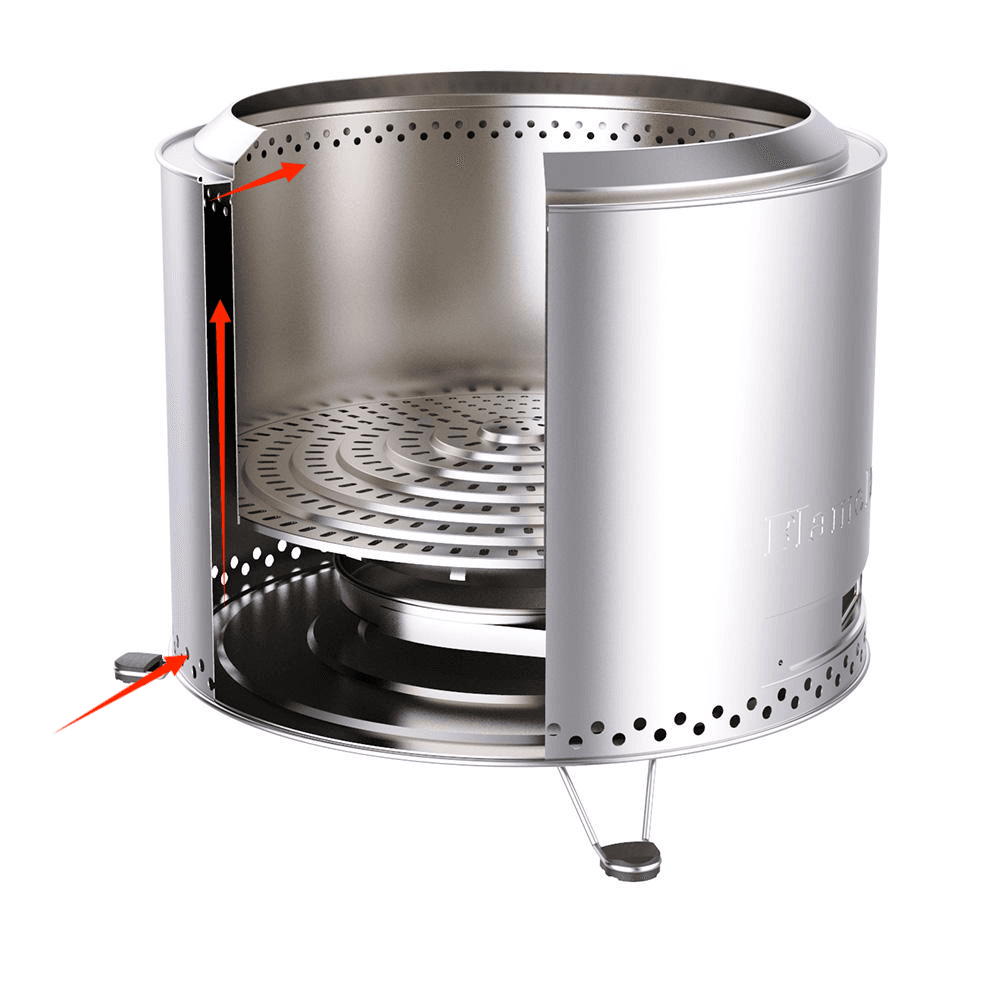
- Dual Ash Pan & Heat Shield Base:What B2B Buyers Must Inspect
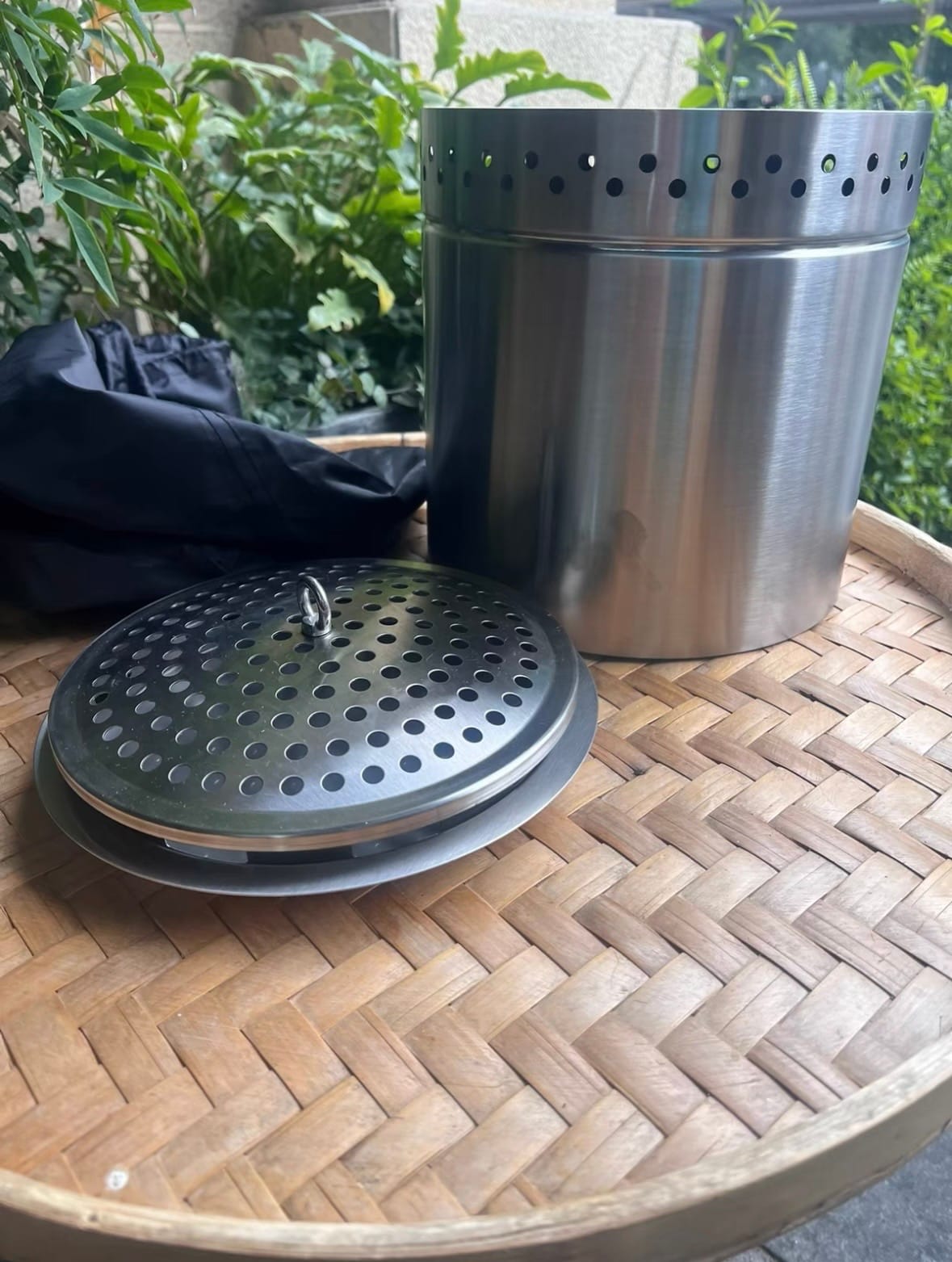
A single ash pan design creates a fundamental problem: as ash accumulates, it blocks the bottom air intake, cutting off airflow and eliminating any possibility of secondary combustion.
A dual-layer system solves this. The upper grate holds the fuel, while the lower pan catches falling ash and embers. The gap between them creates a stable, unobstructed channel for air to rise and preheat before entering the combustion zone. This configuration also provides the structural flexibility to support drawer-style or fully detachable ash pan designs—features that directly affect ease of maintenance and end-user satisfaction.
Heat Shield Base: For applications involving lawns, wooden decks, or other heat-sensitive surfaces, a dedicated base plate or elevated leg system is required to prevent ground damage. For medium to large units, this component is a non-negotiable safety requirement, not an optional accessory.
What to verify when sourcing: Request documentation of the clearance height between the two pan layers. Ask whether the heat shield base has been independently tested for surface temperature limits.
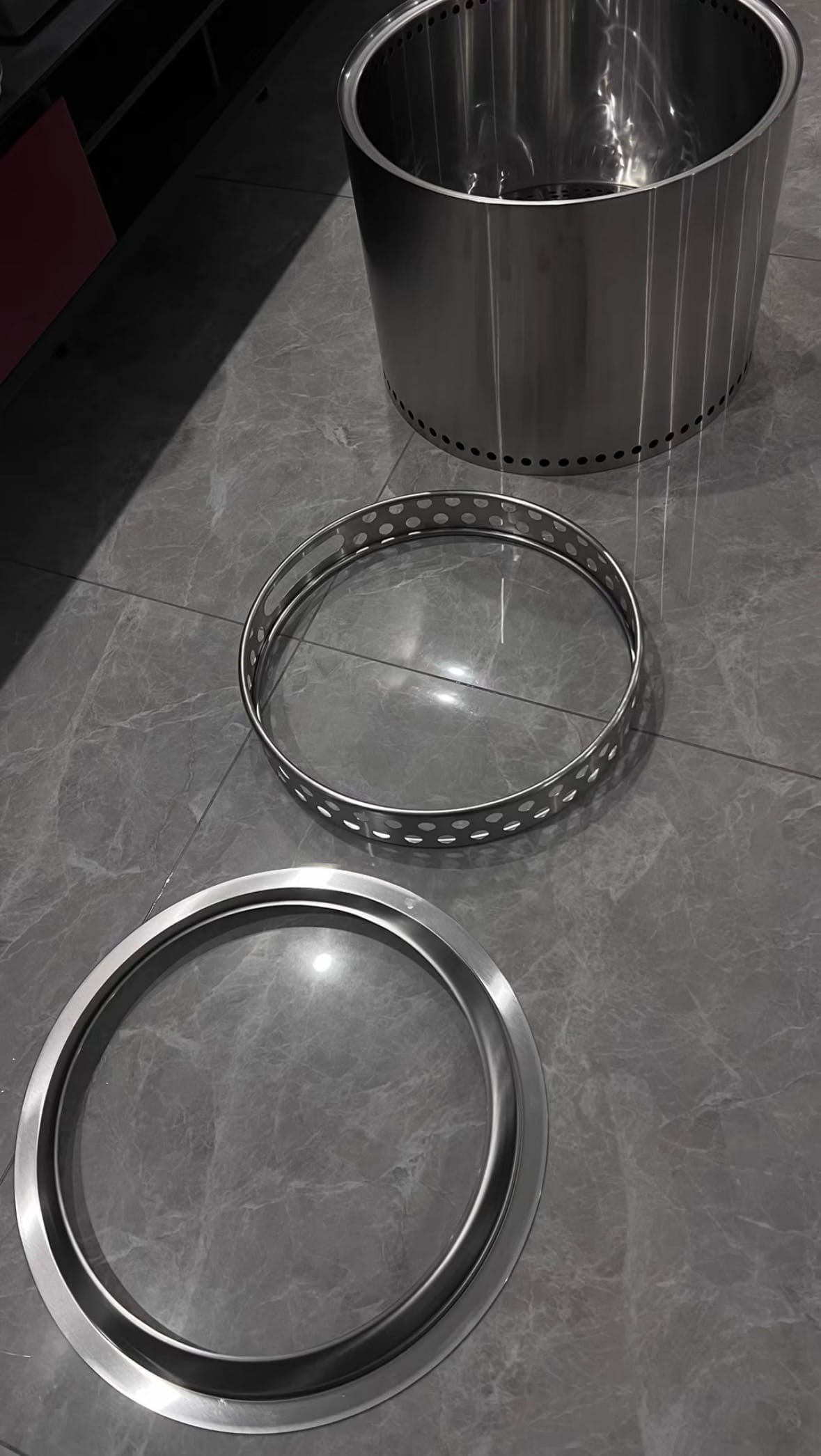
- The Deflector Ring: A Key marker Of Rookvrije vuurplaats Quality
High-quality smokeless fire pits feature an inward-sloping rim at the top of the inner wall—the deflector ring. Its function is geometric: it redirects the upward flow of superheated air toward the center of the combustion zone, concentrating secondary combustion and improving overall burn efficiency.
A fire pit without a deflector ring will lose a significant portion of this preheated airflow to the surrounding environment, reducing smokeless performance particularly in outdoor or breezy conditions.
What to verify when sourcing: Confirm the deflector ring is an integrated component, not a separately attached addition. Welded or press-fit deflectors are prone to displacement under thermal cycling.
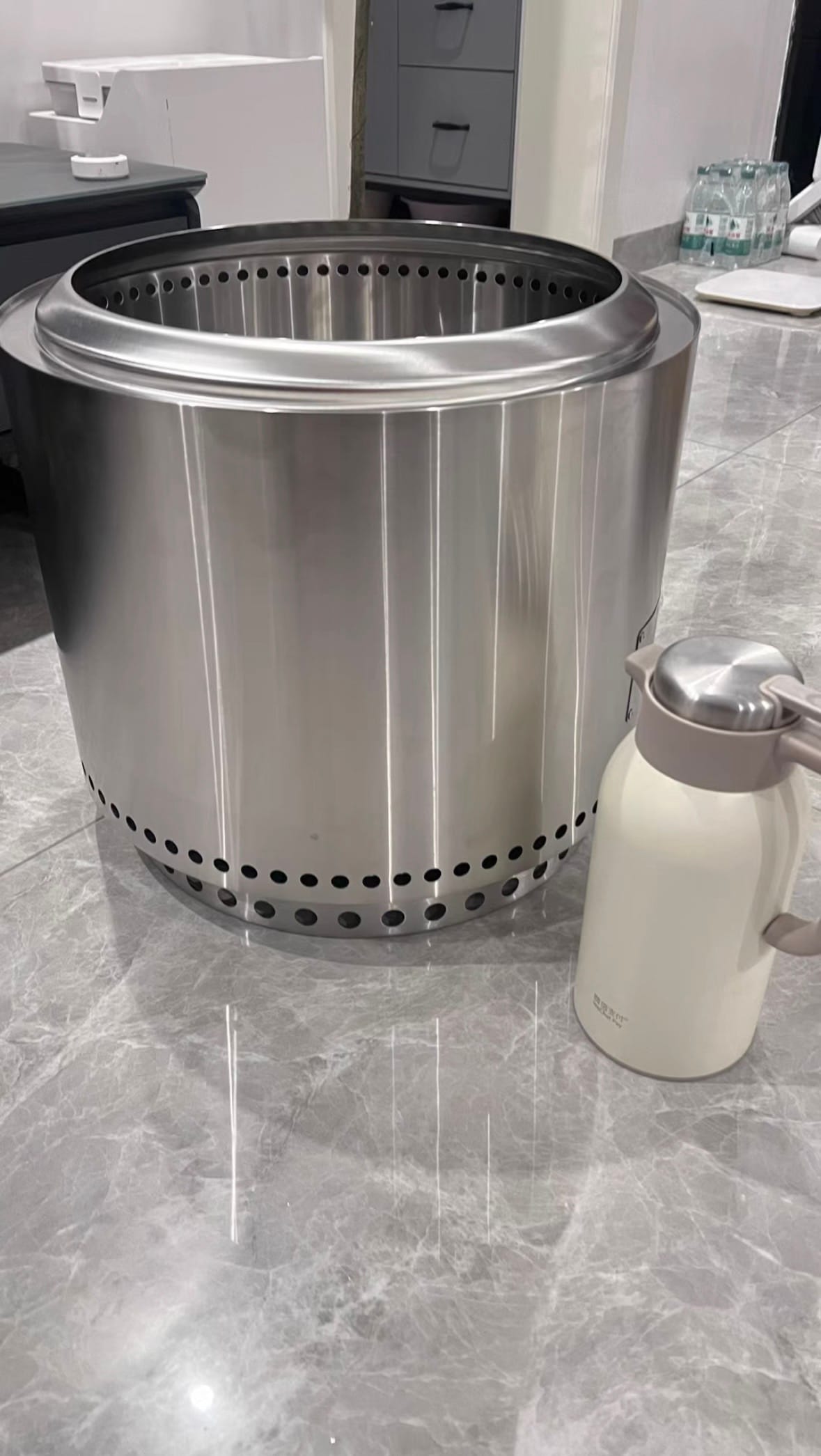
- Bottom Air Intake Ports: How Top Manufacturers Calibrate Airflow
The bottom intake vents are not simply holes in the metal. Their number, diameter, and placement directly determine how airflow is divided between primary combustion at the base and the air jacket that feeds secondary combustion.
• Too many vents: Combustion becomes uncontrolled and fuel is consumed too rapidly.
• Too few vents: Insufficient airflow through the heating jacket undermines secondary combustion, allowing smoke to escape.
The correct distribution must be calculated based on the unit’s total volume and intended fuel type, and applied consistently around the full circumference of the base.
What to verify when sourcing: Ask the manufacturer whether their intake port specifications are based on fluid dynamics calculations or empirical testing. A supplier unable to explain their design rationale for air-to-hole ratio is unlikely to maintain consistent production standards.
Conclusion
Sourcing a smokeless fire pit is ultimately about sourcing thermodynamic precision. The structural elements above—double-wall geometry, dual ash pan design, deflector ring, and calibrated intake ports—are not differentiating features. They are baseline requirements for a product that performs as advertised.
If a supplier cannot explain the engineering basis for any one of these components, that is a reliable signal to continue evaluating alternatives.
Written by Ponel — Founder of OneProStove
Questions about the product or sourcing? Reach out directly — we respond within 1 business day:info@oneprostove.com