
Table of Contents
Before you pay a deposit to a Chinese fire pit supplier, verification comes down to evidence: documents you can independently check, videos of the actual product and its packaging, samples you approve before bulk production, and inspection reports against a defined standard. What you need to see depends on who you are dealing with — a factory must prove it can manufacture; a trading company must prove it can manage. This guide separates the two, because the checks overlap but the evidence is not the same.
First, Establish Which Type of Supplier You Are Dealing With
Suppliers fall into two categories: factories that own production equipment, and trading companies (including supply-chain management companies) that coordinate factories on behalf of buyers. Neither model is inherently risky. What creates risk is a mismatch between what a company claims to be and what it is.
Each type has something different to prove:
- A factory must prove manufacturing capability: its business license covers production, its facility matches its description, and its process can hold your specification.
- A trading company must prove management capability: it knows which factories produce your product, it controls quality rather than assuming it, and it can obtain the same documentary evidence a factory would provide directly.
The most reliable signal in this industry is a trading company that states its role in the first conversation — “we coordinate partner factories and manage quality on your behalf” — and then demonstrates that role with evidence. The checks below will tell you which kind of company you are talking to.
Verifying a Factory: The Checklist
1. Check the business license and business scope. Every registered Chinese company has a unified social credit code, searchable on the SAMR public registry. For a factory, the business scope must include manufacturing or production. If the scope lists only trading or wholesale while the company presents itself as a manufacturer, the mismatch is the finding — stop and ask.
2. Confirm the production site. The address should sit in an industrial zone, and the visit should be live: a video walkthrough of the actual production floor, showing the processes your order will run through — cutting, welding, surface treatment, packing. Polished marketing footage edited together from stock clips proves nothing. A factory that declines a live video call entirely, or agrees and then only sends edited reels, is worth investigating before any money moves.
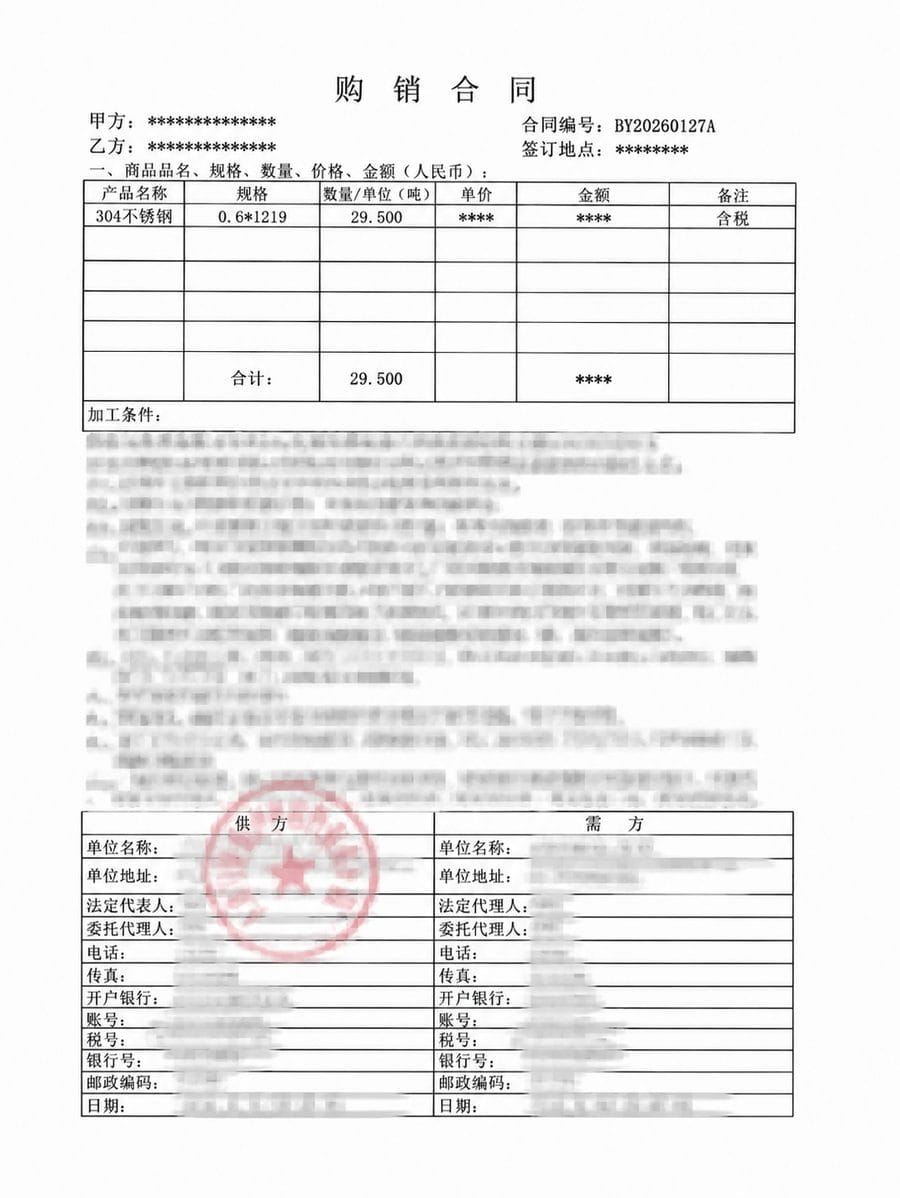
3. Verify material quality with documents, not promises. For 304 stainless steel, a nickel content of 8% or higher confirms the grade; below 6% it is 201 — visually identical on delivery, structurally unfit for outdoor use. The definitive test is a material analysis: a handheld XRF analyzer or a lab test verifies this non-destructively, but it costs extra, and in our experience buyers often hesitate at this stage. There is a practical alternative that most buyers can execute immediately: require the factory to provide its raw material procurement contracts and the steel mill’s certificates for the material used in your order. If you still want independent verification, samples can be tested later. The full comparison is in our guide to 304 vs 201 stainless steel.
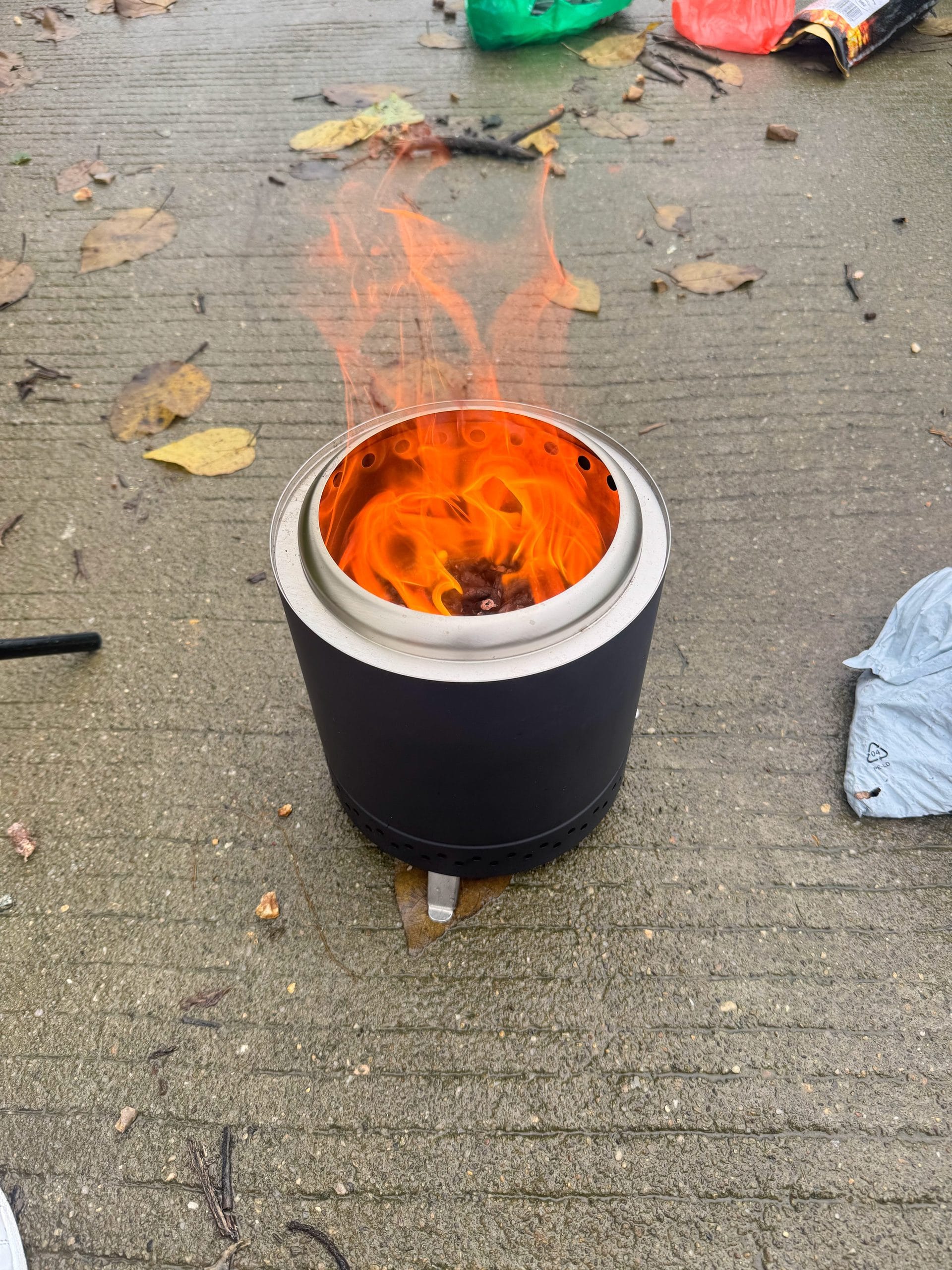
4. Request a burning video of the actual model. Catalog renders and studio photographs do not demonstrate performance. A burning video of the exact model you are buying shows the real flame pattern, the secondary combustion behavior, and the smoke output at steady state. Ask for it recorded on the supplier’s floor, not a manufacturer’s promotional edit.
5. Require drop-test video recordings of the export packaging. Ocean freight is rough, and transit damage is the most common way a first order goes wrong. The check is not “do you use good cartons” — it is a video recording of a drop test performed on the actual export packaging, including the internal foam and baffle protection, against a recognized standard such as ISTA 3A. Photos can be reused indefinitely; a fresh video recording of your packaging configuration cannot.
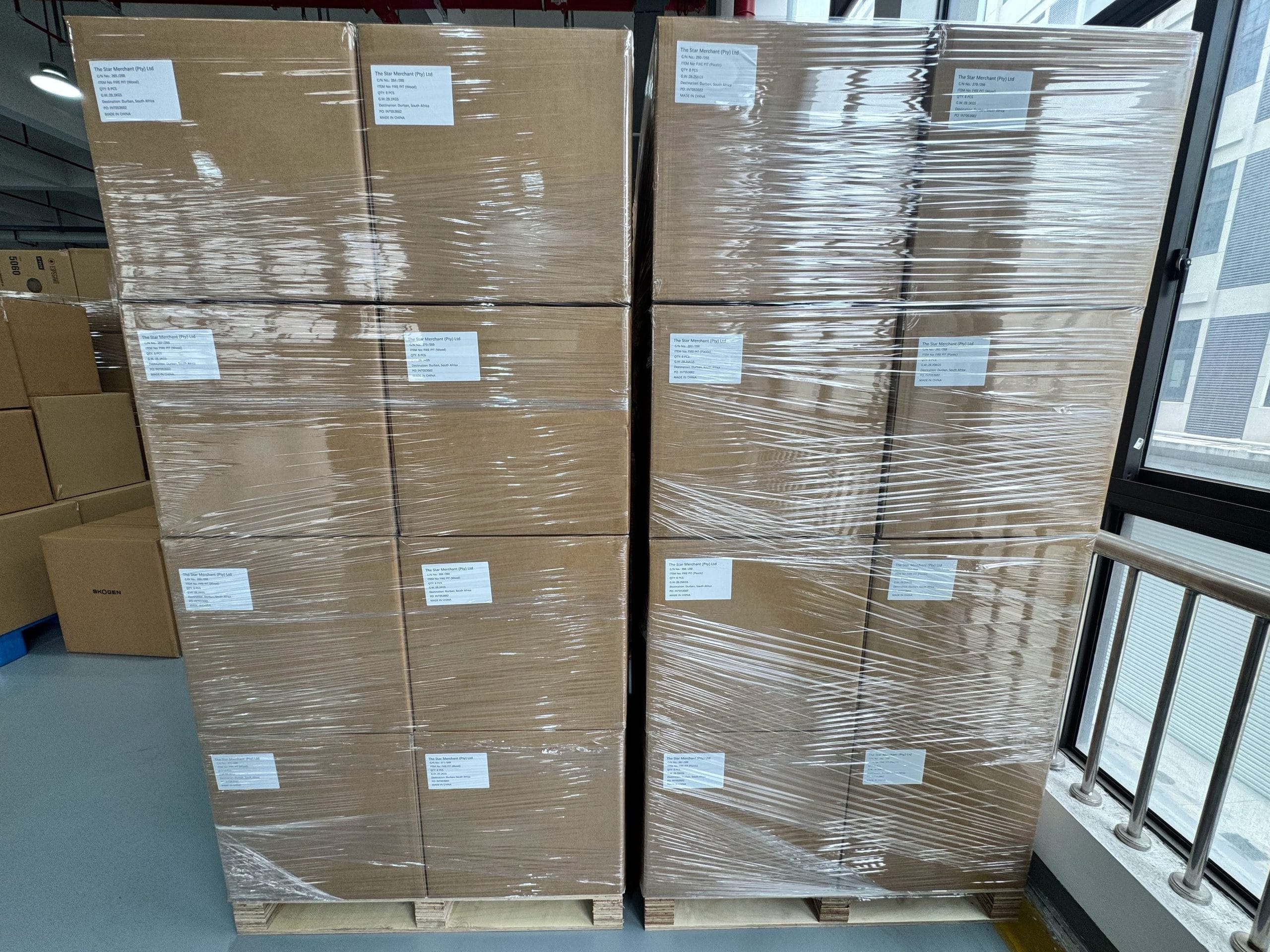
6. Check the export license and customs registration. A legitimate exporter holds customs registration and an export license. Ask for the customs code and verify it independently. A supplier that asks you to arrange export through a third party “because it is easier” has introduced an unnamed party into your transaction — resolve that before paying.
7. Order samples — and expect to pay properly for them. Sample unit prices are structurally higher than bulk unit prices, and the difference is arithmetic. One sample carries costs that a bulk run amortizes across thousands of units: domestic shipping, custom marks and labels, individual logistics handling — and for a customized sample, every adjustment is a one-off cost. Laser setup, manual finishing, single-piece programming: each step runs at a fraction of bulk efficiency.
What a symbolic sample fee can cost the supplier, from our own order records: in one case, our salesperson communicated the sample cost structure clearly and, to accommodate the buyer, charged only a symbolic fee. When the bulk order was being finalized, the buyer compared the bulk unit price against that symbolic fee, found the bulk price higher, and questioned whether our margin was excessive. The cooperation did not survive the question. A sample fee set far below cost creates a false price reference that no honest bulk quote can match — in this case, the goodwill itself became the loss.
Many buyers, meanwhile, prefer not to pay sample fees at all and ask to settle them later against the bulk order. At the sample-negotiation stage the two parties are still at first contact, building trust. A firm refusal to pay for samples reads to the supplier as a signal about the buyer’s ability to cooperate at all; and in our experience, when the bulk order does arrive, the supplier responds by requiring the sample costs upfront rather than deducting them. Beyond the fee itself, a sample order is how a buyer learns how this supplier actually works — how they communicate, how they pack, how they handle a problem. That information is worth the fee.
8. Confirm every customization through samples before bulk production. The approved sample is the reference standard for the entire order: dimensions, finish, material thickness, packaging, and every customization detail. If a dispute arises during bulk production, the sample defines responsibility.
What late confirmation looks like, from a real order we managed: the buyer had not confirmed customization options at the sample stage, so customization negotiation began during bulk production — three customization items, more than ten design drafts, eight sampling rounds. The repeated revisions produced visible negative sentiment among the suppliers, and custom sampling costs ran far above standard sampling because one order drew on multiple cooperating factories. The confirmation process took the buyer a month. Because we manage the supply chain directly — steadying supplier relationships, holding the production schedule together, absorbing the additional costs ourselves — the client’s delivery moved by only nine days, and those nine days landed across China’s Mid-Autumn Festival and National Day holiday, when overtime pay, trailer-truck capacity and port charges are at their worst. Under that compression, the order still shipped complete. That is what supply-chain control means: the client’s delay was one month; our coordination held its impact to nine days.
The lesson stands regardless of who manages the supply chain: every customization confirmed through samples before the deposit removes this entire category of risk. The sample stage is the cheapest point in the process to change your mind.
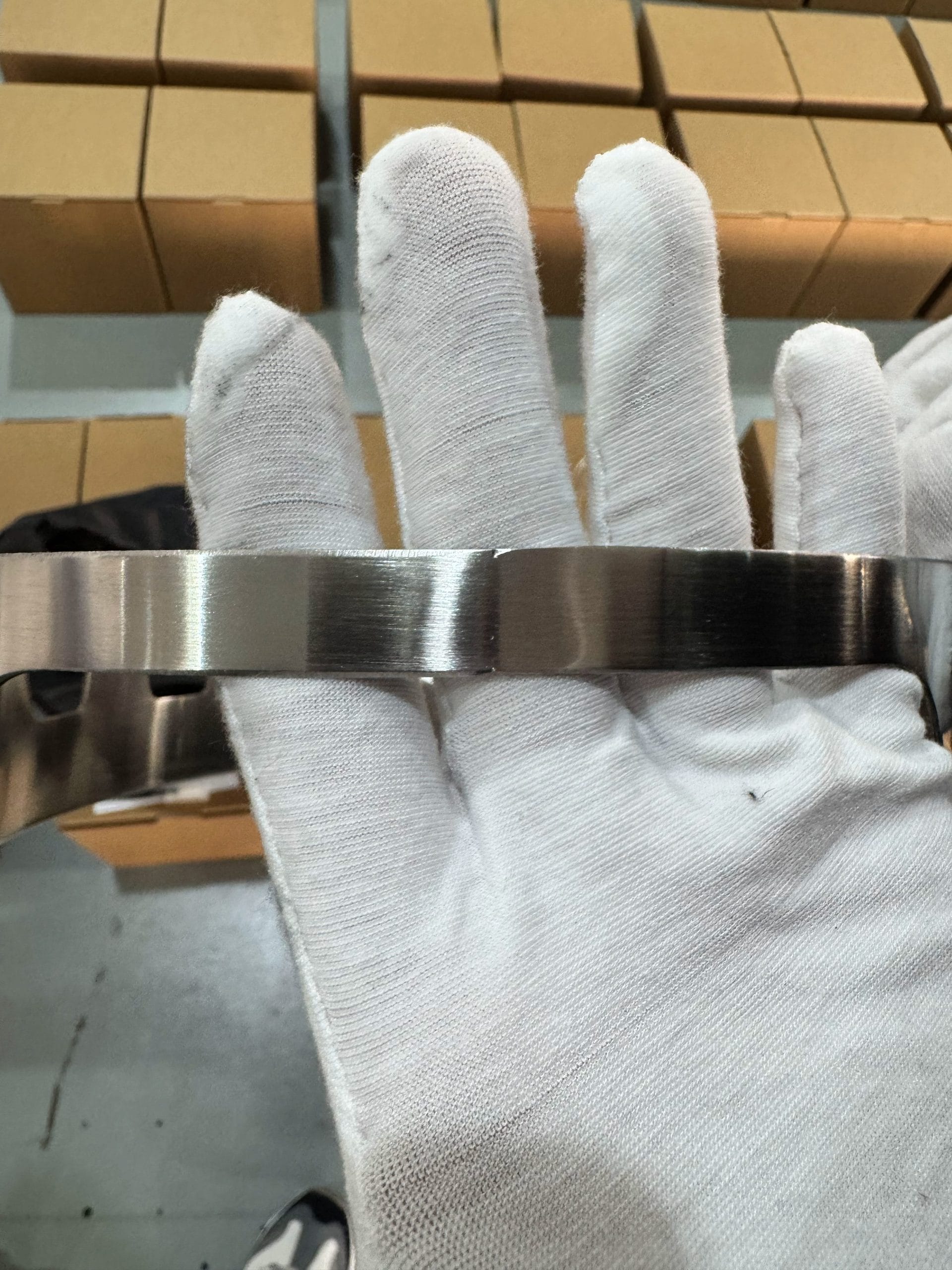
9. Arrange pre-shipment inspection against a defined standard. Inspect after production is complete and before shipment — through a third-party inspection company (SGS, Bureau Veritas, TUV) or your own detailed checklist. The inspection needs a numerical standard, not a general impression. AQL 2.5 is the accepted default for consumer goods: the inspector classifies defects as critical, major or minor, and the lot passes or fails based on the count within the sample. Ask what standard will be used, and ask to see the inspection report afterward. A supplier that resists pre-shipment inspection, or offers to “simply replace any defective units without an inspection,” has declined the one control that protects your money.
This is the standard we hold our own orders to. OneProStove runs its own professional QC team: every order is inspected against AQL 2.5 with full defect classification, under a documented QC process, and each inspection produces a report co-signed by our QC inspector and the supplier — delivered to the buyer in full, not as a summary.
10. Ask for case examples — not technical cross-examination. Buyers sometimes test suppliers with detailed technical questions and judge them by the answers. This measures the wrong thing. Sales and production are separate departments; no salesperson can walk you through machine calibration data, and production staff have no obligation to explain their processes to customers. What a competent supplier can show you is prior work: orders delivered, customization executed, problems solved. Ask for case examples and judge those.
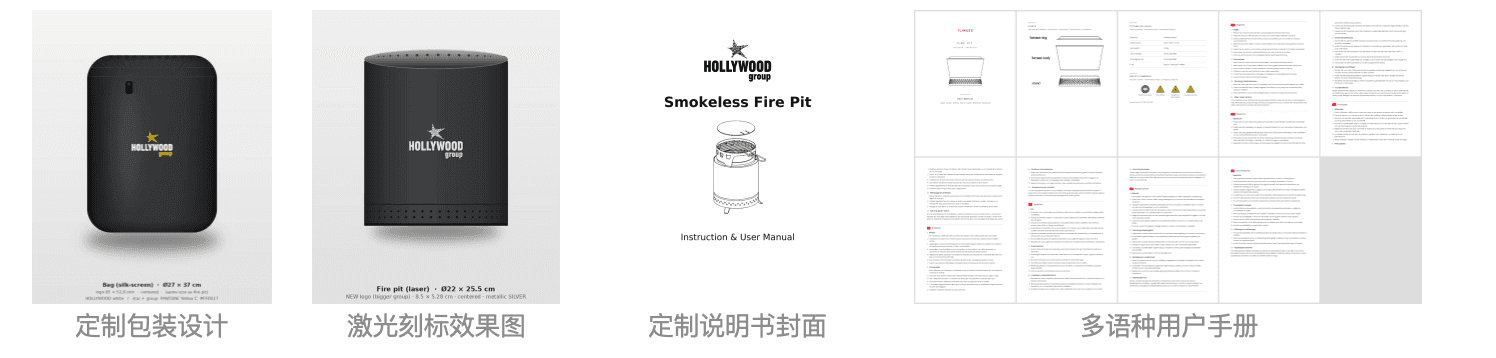
We apply this ourselves. Our custom design service — manuals, laser effects, silk-screen patterns — is free for clients, and in most cases the buyer has never seen the physical result of a laser effect, so there is no mental image to work from. We design the artwork and provide design renders: a render is not identical to the physical product, but it carries high reference value, and it saves the buyer time and rounds of guesswork before anything is cut.
Verifying a Trading Company: What Changes
The physical evidence above — burning videos, drop-test recordings, material documents — does not change. What changes is who must produce it and what it proves. A capable trading company obtains the same evidence from its factories that a factory would provide directly; producing that evidence is, in fact, the service you are paying for. The checklist becomes:
1. Business license — the honesty check. A trading company’s business scope should include import/export or wholesale. If it does, and the company describes itself accurately as a trading company or supply-chain management company, that is transparency, not a red flag. The mismatch to look for is a company presenting itself as a manufacturer whose documents and facility tell a different story.
2. Who actually produces — and can they prove it. Ask which factories produce the product, or at minimum how the company selects and manages them. Then ask for the same live video walkthrough of the production floor, arranged at the partner factory. A capable supply-chain company coordinates this routinely — it is the core of the service being sold, so a refusal here is more significant than it would be from a factory.
3. Can they obtain upstream evidence. Request the full documentary set from your earlier checklist: mill certificates, raw material procurement contracts, burning videos, drop-test recordings. A trading company’s value proposition is supply-chain management; assembling this documentation is the direct demonstration of that value.
4. Do they have their own quality control. This is the largest difference between a pass-through intermediary and a supply-chain manager. Ask three questions: Does the company employ its own QC inspectors? What standard do they inspect against? What does the report look like, and who signs it? A supply-chain company with professional QC — inspecting against AQL 2.5, classifying defects, and issuing inspection reports co-signed by its QC inspector and the supplier — is controlling quality on your behalf. An intermediary that answers “the factory handles quality” is reselling you a factory’s promise.
5. How they handle samples and customization. The fee logic from the factory checklist applies identically here. Add one question: who controls the sampling schedule, and how are customization options confirmed? The only acceptable answer is “through approved samples before bulk production” — for the reasons and the real cost documented in item 8 above.
6. Case examples of coordination work. As with factories, judge by prior work. With a trading company, the case examples should show the coordination itself: multi-factory orders, customization programs, schedule recovery under pressure.
Universal Red Flags
Across both scenarios, the same signals warrant stopping before payment:
- Pricing significantly below market rate for the same specification;
- Refusal of live video calls, or edited footage in place of live walkthroughs;
- Documents that do not match the product — or a claimed factory identity that does not match the business license.
One principle ties these together: the most costly mistake in Chinese sourcing is not choosing the wrong business model — it is failing to notice when a partner is not being transparent about what it is.
How OneProStove Handles Verification
OneProStove is a supply-chain management company based in Ningbo. We do not own a factory, and we tell every buyer this in the first conversation — it is the premise of the service, not a caveat. What that means in practice:
A tiered partner network, with core suppliers. We coordinate partner factories at different tiers of relationship. Our core suppliers are the factories we have worked with longest and most closely — relationships built before our wholesale program opened, which is why small orders run through established processes at factories that already know our quality standards.
Small-order economics, as a designed outcome. Because of that network, our core products are available from 10 units per model, with sampling dispatched in 7 days and lead times of 15–45 days. A test order through OneProStove is not an interruption to an unknown factory — it is a routine order at a partner that expects it.
Our own QC, to a written standard. Our QC team inspects against AQL 2.5, classifies defects, and issues inspection reports co-signed by our QC inspector and the supplier. You receive the report, not a summary of it.
Design support before you can visualize the product. Custom design — manuals, laser effects, silk-screen patterns — is free for our clients, delivered with design renders. Renders are not the physical product, but they give buyers a concrete reference early and remove rounds of guesswork before production.
Supply-chain control when the schedule is under pressure. The holiday-season order described in item 8 — a month of customization confirmation, eight sampling rounds, national holiday logistics — delivered nine days late, held together by our supplier relationships: steadying supplier schedules, securing trailer trucks at a 50% premium, absorbing port surcharges. A buyer assembling suppliers ad hoc for a single order faces the same holiday logistics without those relationships to draw on.
Every item in the checklists above is a deliverable we provide as standard: business registration, mill certificates and procurement contracts, burning videos, drop-test recordings, AQL 2.5 inspection reports, design renders, and case examples. Verification, in other words, is not an obstacle to working with us — it is the working process itself.
FAQ
How do I verify a Chinese supplier without visiting China?
Live video walkthroughs of the production site, documentary evidence (business license, mill certificates, procurement contracts), sample approval before bulk, and pre-shipment inspection against AQL 2.5. Together these cost a fraction of one bad order.
Is it risky to buy from a trading company instead of a factory?
The model is not the risk — opacity is. A trading company that discloses its role, arranges factory evidence, employs its own QC, and shows case examples is manageable. Run the trading-company checklist above and judge the answers.
Why are samples more expensive than bulk unit prices?
A single sample carries costs that bulk amortizes: domestic shipping, custom marks and labels, individual logistics handling, and one-off setup for customized samples such as laser programming. Judge bulk quotes against bulk economics — the sample fee is not a reference price.
How do I test demand before committing to volume?
Small batch, fast samples, honest cost calculation — and validate demand before scaling. Our wholesale program is built for this stage.
Ready to test a fire pit line without betting your inventory? Request a wholesale quote — MOQ 10 units per model, samples in 7 days. You can also start from a standard model such as the KZ-F square smokeless fire pit and scale from there, or contact us with questions first.
Related reading: Smokeless Fire Pit Sourcing: The Complete B2B Technical Guide
[…] OneProStove — Ningbo (that’s us). A supply-chain management company coordinating a tiered network of partner factories. The KZ series covers seven double-wall smokeless models in 304 stainless steel; minimum order 10 units per model; sampling in 7 days; lead times 15–45 days; own QC team inspecting against AQL 2.5 with reports co-signed by our inspector and the supplier; custom design provided free with renders. Boundary: the catalog is deliberately narrower than broad-line steel makers — buyers looking for corten furniture, gas variants or non-fire-pit product lines need a different supplier. Verification: the smokeless fire pit category and our supplier verification checklist. […]