
Ask suppliers about a custom smokeless fire pit at small volume, and two answers are common: a minimum order that is difficult to justify at testing scale, or a “not possible” on part of the customization requested. This guide explains the cost and process mechanics behind both answers, and how OneProStove addresses each of them. The outcome is a customization program with a minimum order of 10 units per model. The cases referenced are real orders.
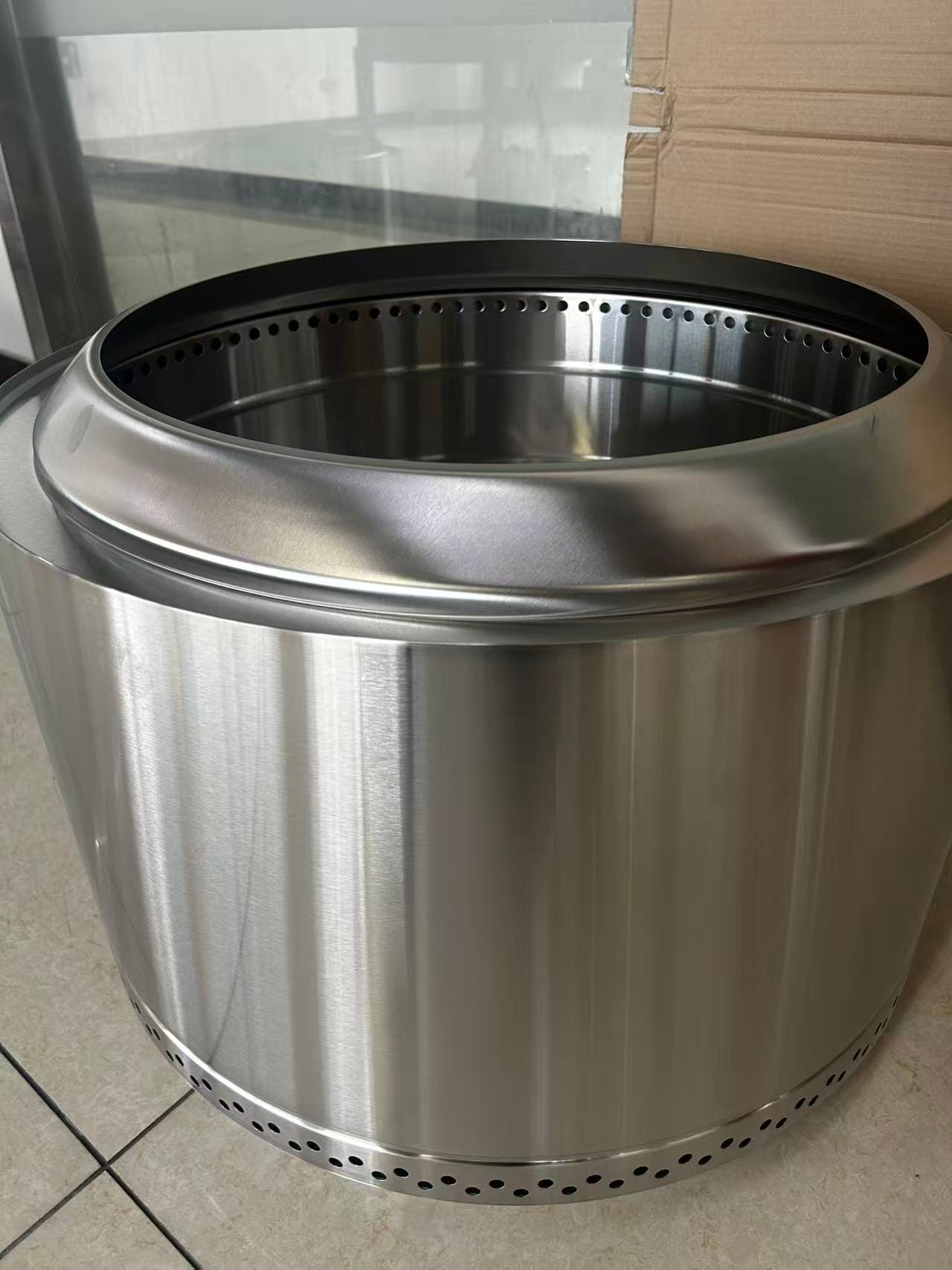
Why Small Custom Orders Get Declined
Both answers trace back to identifiable cost and process mechanics; three of them account for most cases.
First, customization adds fixed costs that do not scale down. Laser marking requires the machine to be recalibrated and its parameters reprogrammed for each run, whether the run is ten units or ten thousand. Samples carry domestic shipping, custom marks and individual handling that a bulk run amortizes across thousands of units. A color change may require a coating line to be cleaned and reset between colors. Each cost is normal in production; concentrated on a small order, they raise the per-unit price to a level where the transaction no longer works for either side.
Second, part of the customization toolkit is batch processing. Silk-screen printing and custom color boxes require plate-making and run setup. Below a certain quantity the per-unit cost is no longer proportionate, so both options are unavailable at ten units.
Third, the answer “not possible at this volume” often arrives without an alternative. A pass-through intermediary relays what the factory said; no one in the chain is responsible for asking which other processes could carry the customization at that volume.
The negotiation stage carries costs of its own: communication and time. Negotiating a small order takes effort on both sides, and in many cases the supplier’s expected return does not justify that effort, so the inquiry is declined. Where negotiation does proceed, the terms themselves can carry risk. One case from our order records illustrates this. A salesperson quoted a customized sample and, to accommodate the buyer, charged only a symbolic fee while explaining the cost structure clearly. When the bulk order was being finalized, the buyer compared the bulk unit price against the symbolic fee, found the bulk price higher, and questioned whether our margin was excessive. The cooperation ended over this dispute. In hindsight, the symbolic fee had created a false price reference: measured against it, no honest bulk quotation could appear reasonable. For this reason, sample cost terms at OneProStove are now recorded in writing before sampling begins.
The Four Customization Layers and Their Volume Requirements
“Custom” covers different kinds of work. Every custom smokeless fire pit request falls into one of four layers, and the process behind each layer determines whether it can run at low volume:
| Level | What it covers | Why | At MOQ 10 |
|---|---|---|---|
| L1 Branding | Laser logo, custom manuals | Laser marking is set up per run; manuals are design plus a short print run | Yes |
| L2 Appearance | Colors and coatings; labels; silk-screen graphics; color boxes | Colors confirmed per order; labels are low-quantity friendly; silk-screen and boxes are batch processes | Colors and labels: yes (confirmed in writing). Silk-screen and color boxes: higher volume |
| L3 Structural | Wall thickness, diameter, materials | Reopens the burn engineering | Higher volume |
| L4 Full development | A new double-wall chamber from zero | A project with its own tooling and timeline | Rarely economic |
L3 and L4 change the product’s engineering — structure, materials, or a new chamber — and require sufficient volume to justify retooling and revalidation. L1 and L2 do not involve engineering changes. On a platform already in production, laser marking runs at unit level, and a custom manual requires only design work plus a short print run. The customization that a launching brand requests — a laser logo fire pit with its own manuals and colors — falls almost entirely within L1 and L2.
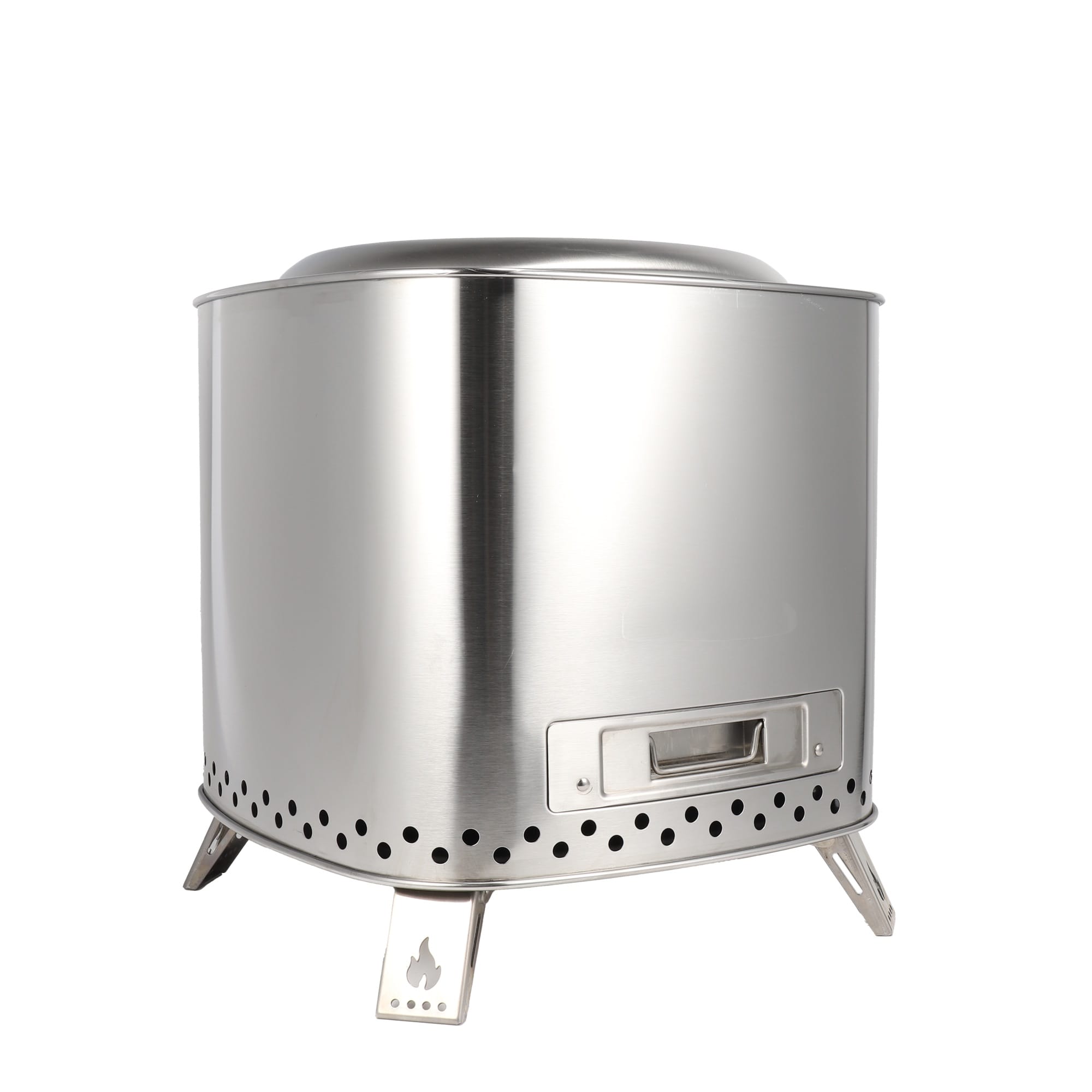
How OneProStove Addresses Each Mechanic
Platform-Based ODM
The smokeless effect is produced by structure, not coating: a double-wall body heats air in the gap between its walls, and the preheated air reignites smoke gases at the upper combustion ports. On a proven platform, this engineering is complete.
ODM places the design side with the supplier. The buyer selects a platform already in steady production — for example, the KZ-F square smokeless fire pit — and applies its brand on top: laser logo, colors, manuals, labels. Because the platform has been tested, burn performance is known before the deposit is paid.
The minimum order of 10 rests on three conditions:
- The production lines run at scale and the material is in stock. Partner factories produce these platforms at scale, with sufficient raw material reserves and inventory; a small order does not require starting a dedicated line.
- The factory relationships are established. We work with partner factories — core suppliers in particular — under cooperation terms that support small-batch orders.
- The cooperation is continuous. Orders to these factories are ongoing; for a line that is already running, adding a small quantity is routine.
The laser setup fee is related: on orders above certain quantities it can be waived as a gesture of good faith. The written quote states whether the waiver applies.
Low-Volume-Friendly Process Alternatives
Silk-screen printing and color boxes cannot run at ten units. The alternative is a set of processes that work at low quantity:
- Laser logo — runs at unit level; the marking quality at ten units equals that at a thousand.
- Custom manuals — designed free of charge, printed in short runs, shipped with the order.
- Colors and coatings — possible at low volume, confirmed case by case in writing, because feasibility depends on the color and the production arrangements behind it.
- Custom labels — where the color box is infeasible, labels carry the brand. Labels can be large or small, printed in color, with a wide design space; they tolerate revisions that a printed box does not; lead times are short; label sampling costs far less than box sampling; and the artwork is produced by our free design service.
The principle behind these alternatives came from a costly lesson: design work runs ahead of production, and production feasibility is confirmed in writing, case by case, before any order. We recommend custom labels first and a color box later; when volume justifies a printed box, the brand package already exists and the changeover is a production decision.
Managed Supply Chain Coordination
The third mechanic is organizational: someone in the chain must be responsible for reconstructing the plan. OneProStove coordinates a tiered network of partner factories, including core suppliers we have worked with since before our wholesale program opened. When one factory’s process cannot serve ten units, the request moves to a partner whose process can; our core suppliers handle small orders through established routines because they know our standards.
The communication cost has an answer on our side as well. OneProStove operates under the principle of One Vision, Pro Execution, with a clear division of responsibilities and a service culture that is part of staff training. We do not claim that every interaction is flawless; the division of roles, the culture, and the work behind them are what move service quality in the right direction over time. The founder’s name is published on this website, and buyers may contact him directly.
The following case record shows how this structure performed under difficult conditions.
Case Record: A 2,300-Unit Custom Order
The order described here is a real order we managed — a fully custom, private-label fire pit order.
The customization was confirmed after bulk production had started. Three customization items went through more than ten design drafts and eight sampling rounds. Because one order draws on multiple cooperating factories, the repeated revisions affected the suppliers’ production schedules. The confirmation process took the buyer one month. The delivery window then fell across China’s Mid-Autumn Festival and National Day holiday: factories paid overtime, trailer trucks carried a 50% premium, and port charges ran more than 30% above normal.
OneProStove managed the supply chain directly: coordinating with suppliers to keep schedules stable and absorbing the additional costs. The order shipped complete with a nine-day delay. The additional holiday costs were not passed to the client; one month of customization confirmation resulted in nine days of delivery delay.
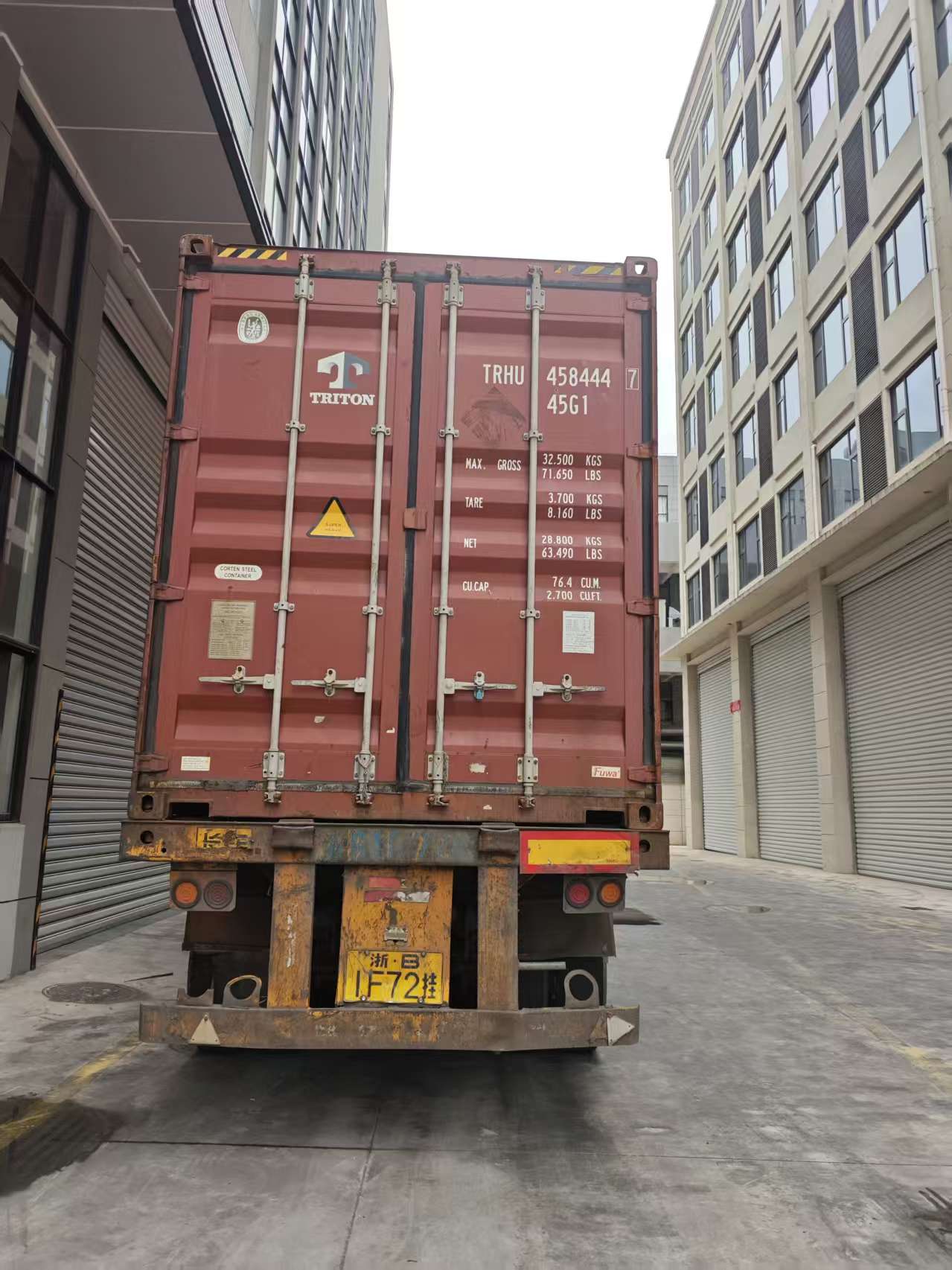
The order also produced a standing rule in our process: customization is confirmed through approved samples before the bulk deposit is paid, because the sample stage is the least expensive point at which a decision can still be changed.
The Cost Items in Low-Volume ODM Customization
Laser setup fee and marking fee. Laser engraving requires recalibration and reprogrammed parameters for each run — a one-time cost that does not scale down with quantity. We quote it as a separate line item so that it remains visible when quotations are compared. On orders above certain quantities it can be waived as a gesture of good faith; the written quote states whether the waiver applies. Beyond the setup fee, each unit carries a marking fee determined by the logo’s style, size and requirements. A simpler logo is simpler to mark and therefore costs less. Pricing follows reasonable market rates.
Sample costs. Sample unit prices are higher than bulk unit prices: one sample carries domestic shipping, custom marks and individual handling that a bulk run amortizes across thousands of units. Whether sample costs are paid upfront or deducted from the bulk order is agreed in writing before sampling begins.
Design work. Manuals, laser artwork, silk-screen pattern design and label artwork are free for our clients and are delivered with renders. A render is not the physical product, but it shows the branding direction before any material is cut.
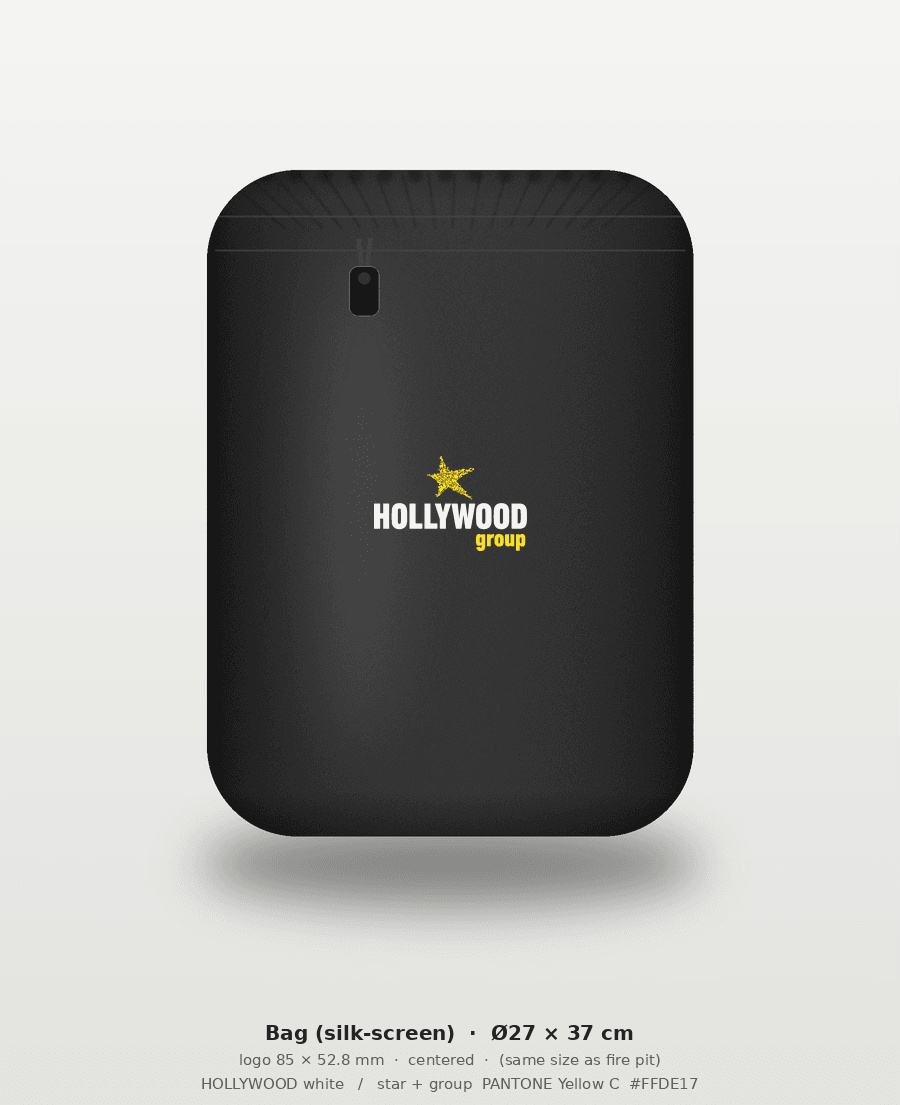
Quotation format. Every quotation is itemized — platform unit price, laser setup, sample terms, labels or packaging — so that each cost element is stated separately.
How to Start a Smokeless Fire Pit ODM Order at MOQ 10
- Choose a platform model from the standard catalog — for example, the KZ-F square platform — so that the body, burn performance and pricing are known from the start.
- Send your logo and branding requirements. Vector files (AI, EPS or PDF) reproduce best in laser marking; if only an image file is available, the design team converts it.
- Review the free design drafts and renders, covering logo application, labels and manuals. Revisions at this stage do not carry fees.
- Confirm the scope in writing: laser logo and manuals, colors where feasible at your volume, labels as the packaging layer, and sample settlement terms. Each item is confirmed case by case before production.
- Sample, then bulk. Samples dispatch in 7 days; bulk lead times run 15–45 days; every order is inspected against AQL 2.5 before shipment.
About OneProStove
OneProStove is a supply-chain management company based in Ningbo, not a factory; we state this in the first conversation. Buyers evaluating an ODM fire pit manufacturer usually concentrate on two questions: who holds the design, and who is responsible for quality. At OneProStove, design, customization management and quality control sit with us, and production runs through the tiered partner network described above. Our QC team inspects against AQL 2.5 and issues reports co-signed by our inspector and the supplier; buyers receive the full report. One contact covers factory coordination, customization, QC, export packaging and logistics. The full program is on the wholesale page, and the series overview is on the smokeless fire pit category page.
FAQ
Why do suppliers decline small custom fire pit orders?
Fixed customization costs — laser setup per run, sampling, batch packaging processes — do not scale down, so they weigh heaviest on small orders. Some processes, such as silk-screen printing and color boxes, are batch-based and unavailable at low volume. On a platform already in production, the branding layer avoids most of these constraints.
What is the MOQ for a smokeless fire pit ODM order?
Ten units per model on standard platforms, including laser logo and custom manuals. Colors and labels are confirmed case by case. Structural changes, silk-screen printing and custom color boxes require higher volumes.
How much does a laser logo cost?
Two fees apply. The first is a one-time laser setup fee for each production run, quoted as a separate line item; on orders above certain quantities it can be waived as a gesture of good faith, and the written quote states whether the waiver applies. The second is a per-unit marking fee, determined by the logo’s style, size and requirements. A simpler logo is simpler to mark and therefore costs less. Pricing follows reasonable market rates.
Can I see the design before production starts?
Yes. Design drafts and renders, including label artwork, are free. A render is not the physical product, but it shows the branding direction before production.
What is the difference between ODM and OEM for fire pit orders?
ODM places design and development on the supplier side: the buyer selects a proven platform and applies its brand. OEM means the buyer supplies the design and the factory builds to it. Our low-MOQ program is ODM-based; full OEM development at small volumes is rarely economic. For buyers comparing fire pit OEM ODM options, the operative questions are the same: who holds the design, and at what volume the customization becomes worthwhile.
To start a smokeless fire pit ODM order, request a wholesale quote — MOQ 10 units per model, samples in 7 days. The KZ-F square smokeless fire pit is a common starting platform, or contact us with your logo files first.
Related reading: Smokeless Fire Pit Sourcing: The Complete B2B Technical Guide
[…] — runs at a minimum order of 10 units per model, with the design work provided free of charge (how low-MOQ ODM customization works). Structural changes and batch processes such as silk-screen printing and color boxes require […]